
How Arrest Warrants Work in Maryland
An arrest warrant in Maryland is a judicial order tied to one case. Criminal Procedure §5-211 and §5-212, plus Maryland Rule 4-212, govern the process. A judge or other authorized judicial officer must first find the required legal basis. Probable cause sits at the center of that finding. Once issued, the order lets an officer arrest the person named for the matter at issue. Which court handles the case depends on its level. Felonies generally proceed in the Circuit Court of Maryland. Most traffic, misdemeanor, and specified lower-level criminal matters go to the statewide District Court. The issuing venue tells you which clerk holds the court file. A public docket entry can help locate the case, but the charge, the warrant, the arrest, and the later court decision are separate events in Maryland records.
Specified Maryland Arrest-Warrant Files Can Stay Restricted
Maryland keeps some arrest-warrant papers out of public view. General Provisions §4-316 closes specified court files and charging documents tied to Rule 4-212(d)(1) or (2) warrants. Those records stay closed until the warrant is served and a return is filed. Or until 90 days pass. Statutory exceptions and court orders can change that timing. Grand-jury and conspiracy matters may stay restricted even longer, until related warrants are served and returns filed. None of this seals every Maryland criminal case for 90 days. So where do court records come from? The custodian at the court where the case was filed. The Judiciary's Maryland Rules Title 16 judicial-record access information describes that local route. For one District Court case, use the DC-034 request form; DC-034A covers multiple cases. Copies cost $0.50 per page. A certified copy runs $5. That charge buys pages, not a warrant clearance. Releasable police or sheriff records sit with the agency custodian under the Maryland Public Information Act, which neither overrides court restrictions nor answers live warrant status. The Judiciary's general court-access page explains the request route for Maryland courts, not any individual warrant.
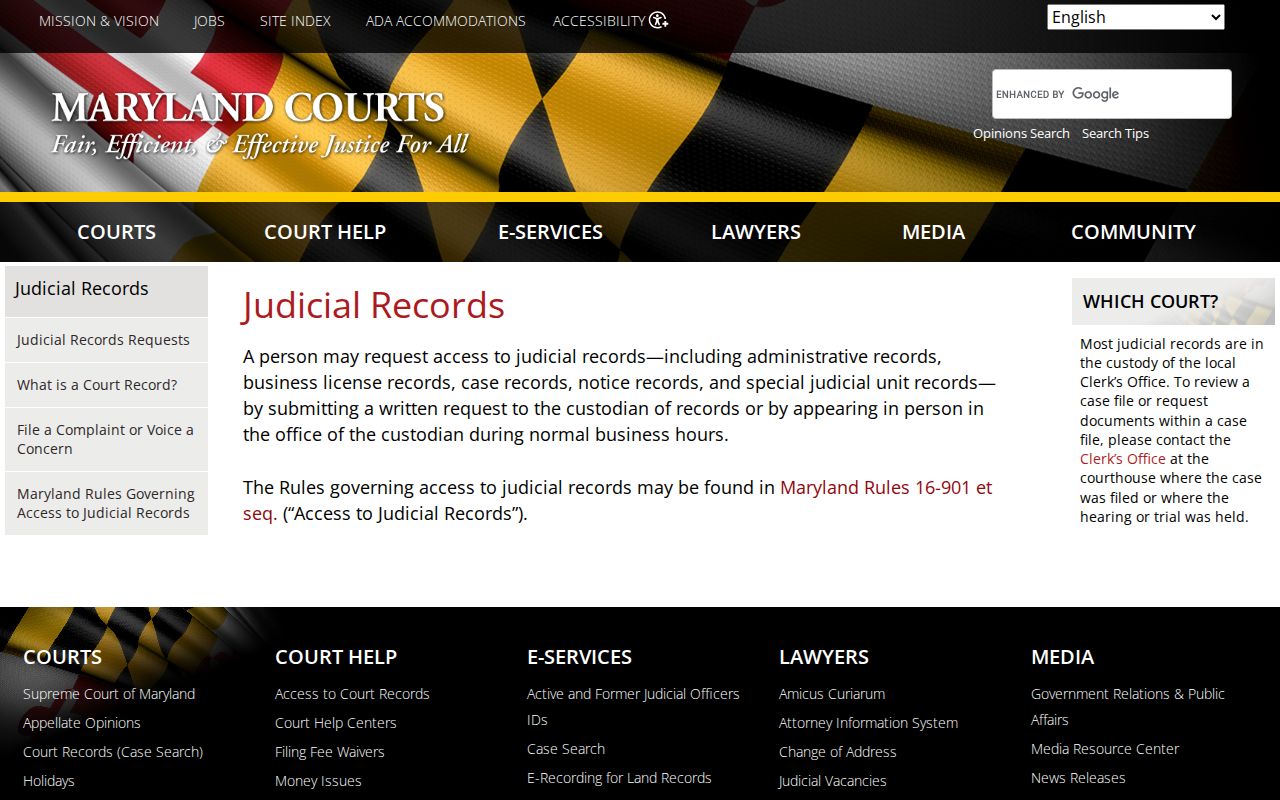
A request cannot override a restriction, juvenile confidentiality, or a sealing order. Maryland juvenile delinquency records are different. They stay confidential under separate law and court rules. Before treating a missing online document as the final word, ask the clerk which part of the case record is public and which request process applies. Note: Section 4-316 covers specified arrest-warrant records, carries exceptions, and does not close every Maryland criminal case for 90 days.
Access limit: A docket may be public while a specified arrest-warrant paper remains restricted before service and return.
Arrest Warrants: What They Contain
A Maryland arrest-warrant record is often spread across several places. The case docket, the warrant document, an officer's service or return entry, and later case events can each hold a piece. Case Search is an index, not one statewide warrant form. The fields here describe common record concepts from Maryland court materials. They do not promise that every item shows up in a public result.
| Case number and court | Case Search may show the case number and filing court. No uniform public warrant-number format was confirmed. |
|---|---|
| Person and party role | A public index may identify a party and role, with other identity details subject to access rules. |
| Charge or legal basis | The charging record states the alleged offense. An allegation is not a conviction. |
| Issuing officer and date | The warrant paper may show the judicial officer and issue date, but access may be restricted. |
| Service and return | An agency or court record may note service, return, or a later status event. Public display is not assured. |
| Release terms | Bond or release conditions may be set after arrest by a commissioner or judge, not as a fixed statewide warrant amount. |
For a Maryland case, use the court name and case number to reach the right clerk. A blank field proves nothing. It does not mean the court issued no order, or that a portal status is current. Ask the clerk which record controls, and whether the assigned law-enforcement agency holds a separate service or return record.
A Maryland Case Search No-Hit Cannot Certify No Warrant
Maryland Judiciary Case Search is the free dockets tool most people try first. What it covers depends on the court, the case type, the record's age, and access rules. A name search stops at 600 results. When the site reports no electronic record, the honest read is limited: the docket may simply sit outside its online scope. Some arrest-warrant papers stay restricted until they are served or returned. So treat a hit as a lead toward the issuing court. Maryland does not treat this portal as an active-warrant certification. The Maryland State Warrant System is another animal entirely. A 2018 Montgomery County Police directive describes agencies querying District Court warrants on the issue date. That paper does not open the system to the public. It says nothing about which agencies join, whether other courts feed it, or how service and recall updates land later. Maryland residents get no verified search form there, and no published field list.
| Channel | What It Can Help Locate | Key Limit |
|---|---|---|
| Case Search | Covered public case and filing court | Not a complete warrant-status register |
| Maryland State Warrant System | Documented agency query of District Court warrants | Restricted query; public coverage is unknown |
| Issuing clerk and serving agency | Local case status and service routing | Contact the office tied to the specific case |
If a Maryland search returns nothing, check the spelling and case facts first. Then contact the likely District Court or Circuit Court clerk. Juvenile and other nonpublic records take a different route. A negative county list also cannot clear a warrant it never included.
How Warrants Get Served in Maryland
A Maryland court does not hand its warrant to just anyone. The order goes to an authorized officer or agency, and county sheriffs handle court process in much of the state. Sometimes local police take the job instead. Maryland State Police can also execute a warrant within their own authority. The court stays in charge of the paper itself: it issues the order, rules on any motion, and can recall it later. Whatever the serving agency does, it reports back, and the court keeps the record. Service and recordkeeping work hand in hand, though they remain separate roles.
On the enforcement side, the MSP Criminal Enforcement Division runs fugitive work, including the Maryland State Apprehension Team (MSAT), which coordinates with local, state, and federal partners. MSAT is not a public warrant search. It is not always the assigned agency in a local case either. Its role is statewide support, which is what that page spells out.
Maryland State Police CED / MSAT
Statewide fugitive and warrant-service coordination with partner agencies; not a public self-search counter.
Suppose a Maryland arrest warrant turns out to be real. Your first question for the issuing court is which agency handles service. Ask also what happens after an appearance or a surrender. An arrest usually brings processing and an initial appearance before a commissioner, who weighs release under the governing rule. Where you check in, when, and how release unfolds all depend on the case and the court's instructions. Note: A Maryland sheriff is a common service channel, but the court or local law enforcement may assign another agency.
Maryland Arrest Warrant Cases Use Different Clerks
Maryland splits its criminal trial courts into two main routes, and the court on the case decides which clerk you call. The Circuit Court of Maryland sits as the general-jurisdiction trial court in each county and in Baltimore City, and felony cases generally move through it. The District Court of Maryland works differently: one statewide court organized in geographic districts, handling most traffic, misdemeanor, and specified lower-level criminal matters. So the venue controls, not where you happen to live.
| Court | Typical Criminal Route | Record Custodian |
|---|---|---|
| Circuit Court of Maryland | General jurisdiction; felony cases generally proceed here | Clerk of the Circuit Court in the filing county or Baltimore City |
| District Court of Maryland | Most traffic, misdemeanor, and specified lower-level matters | Local District Court clerk or administrative clerk |
There is no separate municipal or justice-of-the-peace criminal-court tier in Maryland. A city or agency can hand you a citation, but the court proceeding itself belongs to an authorized court. To pin down a venue and its local sheriff route, use the Browse Counties directory. A statewide Case Search result will not tell you which local agency holds every service detail.
Arrest Warrants, Summonses, and Bench Warrants
Not every piece of Maryland court paper does the same job. An arrest warrant authorizes custody on the legal basis stated in the order. A summons just tells a person to respond or appear. A bench warrant is tied to a proceeding already underway, often after a missed appearance or a failure to comply. Check the name and date on the court record to see which process you are dealing with. That distinction matters when you pull a Maryland docket. For the court's missed-date process and local next steps, see the Bench Warrant Lookup information.
| Feature | Arrest Warrant | Summons | Bench Warrant |
|---|---|---|---|
| What it does | Authorizes arrest in the specified case | Orders a response or appearance | Directs custody or appearance in a pending proceeding |
| Common basis | Required legal showing, commonly probable cause | Notice to answer or appear | Failure to appear or comply in the case |
| Case posture | May begin criminal process | Sets a path to court without an arrest order | Follows a court obligation already in the case |
| Next step | Confirm with issuing court and ask about counsel and appearance | Follow the stated date and response instructions | Ask the clerk about a motion, hearing, or appearance |
Maryland Arrest Warrant Release Terms Vary by Case
Maryland sets no single statewide cash amount on an arrest warrant. Under Rule 4-216.1, release turns on the case and the person's circumstances. A commissioner often handles the initial appearance after arrest. A judge may review release as the rule allows. If a warrant is active, do not assume a bond amount can be read from a public docket or inferred from the charge alone.
- Personal recognizance (PR)
- Release on a promise to return, without cash collateral paid at release.
- Unsecured bond
- A bond obligation without money paid up front, subject to its terms.
- Cash bond
- Money deposited as release security under the court's order.
The Judiciary's arrest guidance lays out the ways to post court-set bond and the possible use of a bail bondsperson. Know the difference in the money. A bondsperson's premium is generally nonrefundable. Court-held cash is different, and it may come back subject to conditions and case outcome. Ask the court which payment methods it accepts and whether any vendor charge applies. A release decision does not dismiss the Maryland charge, and it may not clear another case or an MVA hold. Note: Release conditions and warrant status are separate case questions, even when both are addressed after an arrest.
Handling an Arrest Warrant in Your Name
Think a Maryland arrest warrant carries your name? Confirm the case with the filing court before you decide how to appear. A public docket can point you to a venue. Only a clerk or authorized agency can confirm current status, so ask directly. Is the warrant still active? Which agency holds service responsibility? Find out whether counsel should file or appear, and whether the court expects a scheduled surrender or some other step.
- Search Case Search using the case name or number you have. Narrow the search if needed, and remember that restricted or missing records may not appear.
- Call the filing court's clerk with the case number and ask for current process, motion, hearing, and appearance instructions.
- If the clerk refers to service, contact the assigned sheriff or police agency through the local route. Confirm where and when to report before traveling.
- Use the county and Baltimore City directory to find the right local court and agency when the filing venue is not clear.
Hold onto every signed order, receipt, and release paper. If an MVA notice names an outstanding warrant, ask the reporting agency and the court how satisfaction gets sent, then check the separate MVA status. Each Maryland court case may need its own action.
Important: If an arrest warrant may be active, get case-specific legal advice and confirm the court's appearance or surrender instructions before you travel.
Maryland Motion Forms Do Not Promise Recall
A recall or quash request goes to the court that holds the case. Maryland's District Court form DC-002 and its Circuit Court counterpart CC-022 can back a motion. Neither is a one-size-fits-all recall application. The right filing depends on the court, the case, and the relief requested. Before filing, ask the Maryland clerk whether the motion needs supporting facts, service on the prosecutor, a hearing date, or an appearance. Clerks explain the steps. They cannot promise a judge will grant anything. That call belongs to a judge or another authorized process, which decides whether to recall, quash, or modify the warrant. If the warrant has been served, ask how the return gets recorded and which agency receives the court's order. Timing then matters, because Maryland records update on their own schedules across the court docket, law-enforcement systems, and MVA files. An old status can linger. Keep proof of the order. Follow up with the court or the assigned agency if a stale entry stays visible. A filed form, a fine payment, or a release proves only that step happened, not that every separate record caught up. Note: A filed Maryland motion shows a request was made, not that a warrant was recalled or an agency record updated.