
How Traffic Warrants Work in Maryland
A traffic warrant in Maryland is court process tied to a citation or a required court date. Most of these cases land in the District Court of Maryland, a single statewide court sitting in local venues. Miss a response or an appearance, and the court can act under the law that fits the citation. The pieces stay separate, though. A fine is one record. The warrant is another. So is any MVA action. An overdue ticket alone does not prove that a warrant was issued. The filing court holds the case record and decides any request to change a warrant. The sheriff or another assigned agency may serve it. Maryland runs no separate municipal or justice-of-the-peace criminal tier for routine traffic warrants. A city agency can write the citation, but the citation instructions and the court record show where the case went. The Maryland Judiciary traffic-citation information lays out the response options and tells drivers to act within the stated period. It identifies a case step. It is not a public register of active warrants.
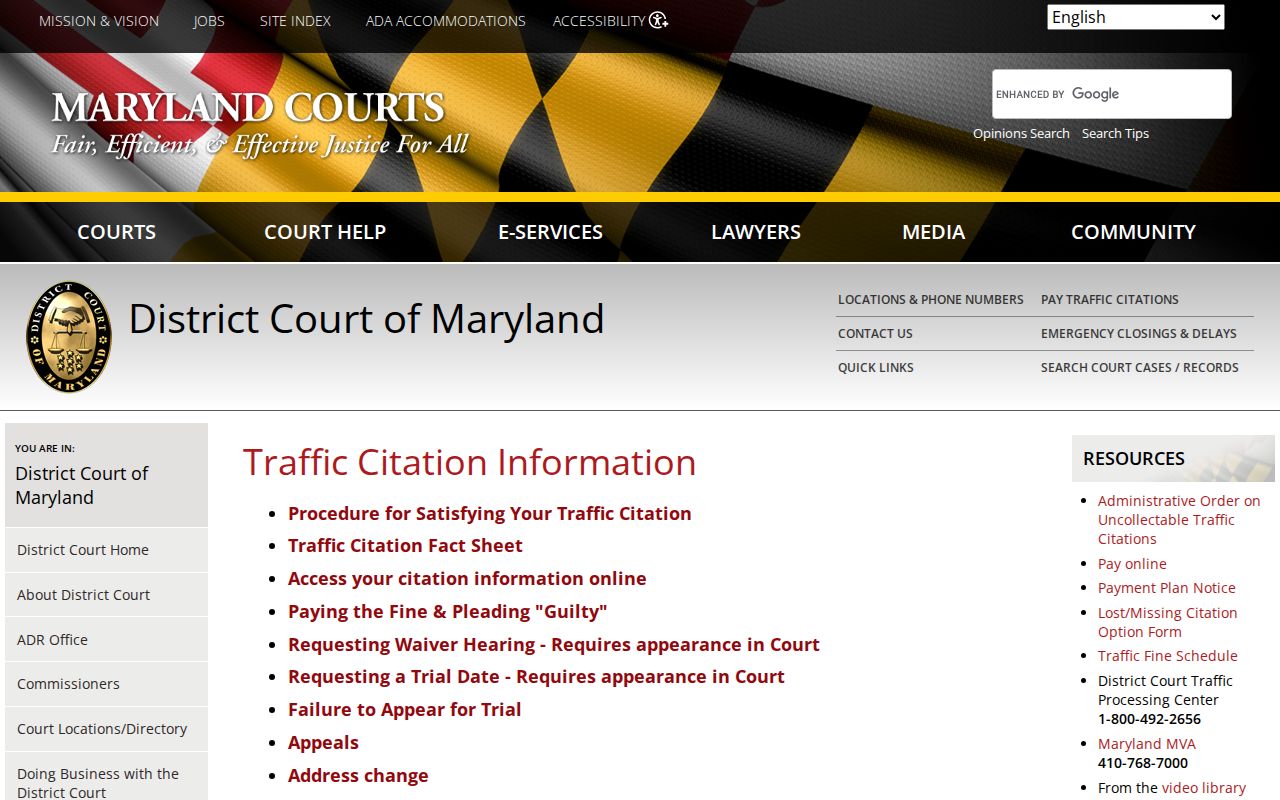
The citation page maps the court's response paths. Use those instructions to find the filing venue for a Maryland warrant question, then ask the clerk directly about any warrant event in the case.
Maryland Citation Noncompliance Can Lead to Court Action
Maryland's Transportation Article §26-204 spells out the steps. It applies when a citation goes unanswered. The court may notify the Motor Vehicle Administration or issue an arrest warrant under the statute, depending on the offense and the court process. For a non-incarcerable offense, subsection (f) sets a 20-day window after notice of noncompliance before a warrant may issue that way. That window matters. A late fine does not become a warrant overnight. The law also lets some noncompliance be cured. Paying the amount due can cure it, and so can an eligible payment plan or a request for a new hearing or trial date. After any of those, the court may notify MVA. That notice concerns the related suspension. If a bench warrant has already issued, ask the court whether a separate appearance or recall order is still needed. Read the citation and any later notice together. In Maryland, the offense category, the service of notice, and the court action all matter. A Maryland traffic warrant is a judicial event, not a license suspension. The suspension is administrative. The District Court clerk can confirm which event appears in the case. The current text of Transportation §26-204 is the source for this process. Neither statute nor docket replaces legal advice on an individual case. Note: a Maryland citation can produce an MVA notice without proving that a separate judicial warrant was issued.
How Maryland Flags a License Hold
Maryland offers no public FTA or warrant-hold lookup. The motor vehicle statutes describe two MVA actions tied to qualifying outstanding warrants. Neither dismisses a warrant. Neither is a public search form for all Maryland traffic warrants. Under Transportation §16-204, qualifying notice from law enforcement that a person is named in an outstanding warrant can trigger a driving-privilege suspension. MVA sends notice first. A limited challenge is available if it identified the wrong person. The suspension lifts once MVA receives notice that the warrant is satisfied. Any independent suspensions still stand.
| Process | What It Affects | Condition and Route |
|---|---|---|
| Transportation §16-204 | Driving privilege | Qualifying law-enforcement report; confirm warrant status with the reporting agency and court |
| Transportation §13-406.1 | Vehicle registration or transfer | Qualifying warrant, at least 31 days, and unsuccessful service because the person could not be located |
| District Court case | Citation and judicial warrant record | Ask the local clerk about case status, appearance, payment, and recall steps |
The §16-204 text shows the report and notice steps behind a Maryland license action. The statute itself is the authority.
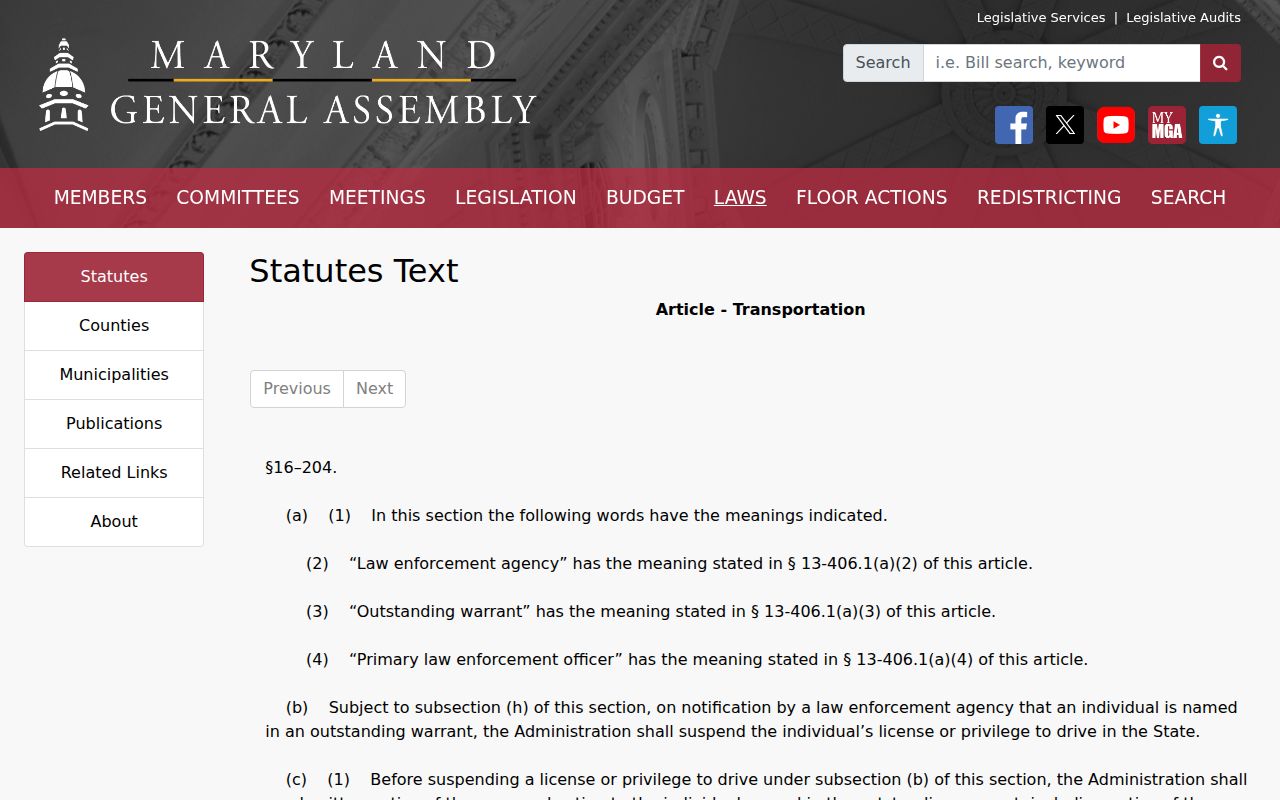
A Maryland license notice is a prompt, not proof. Check the issuing court and the agency named in the notice before drawing conclusions about any underlying warrant.
Four Ways to Respond to a Maryland Traffic Citation
Maryland gives you four ways to answer a payable traffic citation, and you have 30 days from receipt to pick one. You can pay the fine. You can request a waiver hearing. You can request a trial, or ask for a payment plan after disposition where eligible. A waiver hearing and a trial both involve court appearances. The right pick depends on the citation and the outcome you want, so follow the case-specific instructions printed on the ticket itself. One caution on the online route: the current notice says Maryland Online Resolutions (MDOR) is not accepting new cases, though cases already filed can still be processed. That status can change. Check the live notice first. The District Court automated line, 1-800-492-2656, provides hearing-date and court-location information. It is not a warrant-confirmation hotline. Maryland traffic guidance also separates payable tickets from matters that require a court appearance. Lost the ticket? Use the citation number or the case details in Case Search, then contact the clerk for the correct venue. Do not send a payment if you intend to request a hearing or trial, unless the citation's instructions say otherwise. The Maryland Judiciary's current traffic response information lays out the available routes and the current MDOR notice. Those instructions help you answer the citation, but only the issuing court can confirm whether a separate Maryland bench warrant exists.
Maryland Traffic Warrant Checks
Maryland runs no public statewide warrant search for traffic cases. Judiciary Case Search can help you spot a covered District Court traffic case and its venue. It does not certify current warrant status. The Case Search FAQ describes access limits and a 600-result ceiling, so a no-hit can mean a search problem or a record that is not public online. Use the case number or citation number where you have one. Then confirm with the Maryland clerk.
- Use the citation or case number to locate the public District Court docket in Maryland Judiciary Case Search.
- Write down the court, case number, citation details, and hearing date shown in the record.
- Use the Browse Counties directory and the Judiciary court map to reach the filing court's local clerk.
- Ask the clerk whether a bench warrant was issued, whether it remains active, and what action the court requires.
- If service status is the question, ask which sheriff or other agency was assigned and follow that office's instructions.
The District Court location map routes readers to local venues across Maryland. Pair it with the county/city directory. That identifies the filing court. The map itself is not a warrant search result. A clerk can explain the procedural route. Legal advice is off the table. When a citation comes from a city or state agency, the issuing agency and the court may differ, so keep the ticket and any MVA notice handy when you call. Note: the automated line helps with hearing logistics in Maryland but should not be used to confirm a warrant.
Maryland Traffic Warrants Have No Public Statewide Lookup
A 2018 Montgomery County Police directive names the Maryland State Warrant System. It says agencies could query District Court warrants on the day issued. That is a restricted law-enforcement query. It is not a resident portal. The directive does not say which agencies participate, whether every District Court warrant type is covered, or how service and recall updates move through the system. The gap matters when you check a Maryland ticket. A county sheriff page may list only some warrants. Case Search is a public index, not a warrant list. MVA notices under separate statutes show an administrative action, not every court record. Maryland readers must confirm the specific citation with its filing court.
| Maryland Channel | Useful For | Not a Substitute For |
|---|---|---|
| Case Search | Finding a covered traffic case and citation details | Confirmation that a warrant is active or recalled |
| District Court clerk | Case procedure and court status | Legal advice or another agency's service record |
| Sheriff or assigned agency | Its own service and surrender instructions | Changing the court order without authorized process |
| MVA notice | Identifying a separate license or registration action | Proof that the court warrant is resolved |
Need court documents? Start with Maryland Rules Title 16 and the local clerk. For releasable police or executive-agency records, use the process under the Maryland Public Information Act. Neither route is a live statewide yes-or-no warrant form.
Clearing a Maryland Traffic Warrant
Start with the issuing District Court. Ask whether an active bench warrant sits on the citation. Ask what triggered it, and what the court expects: payment, a new date, a motion, or an appearance. Pay an eligible fine or start a plan, and that may address the balance. Still, that alone does not prove a separate Maryland warrant was recalled. The clerk can explain which office accepts a filing and whether an order will be entered, which is the step that matters for clearing a Maryland traffic warrant.
- Confirm the citation number, filing court, balance, and current warrant status with the District Court clerk.
- Ask whether to pay, request a hearing date, file a motion, arrange an appearance, or seek an eligible payment plan.
- Get a signed order or receipt and ask how the court will notify the assigned serving agency.
- If MVA sent a notice, contact the named reporting agency about satisfaction and verify the separate MVA status.
The court's answer controls the warrant. Maryland's MVA process may then require the court or law-enforcement agency to send a satisfaction notice, so keep the paperwork and ask when each record should update.
Caution: A fine payment or MVA status change does not prove that an already issued District Court bench warrant has been recalled.
DCA-131 Does Not Automatically Recall a Maryland Warrant
The District Court's DCA-131 installment plan may be open when eligible outstanding District Court fines total at least $150. Circuit Court fines are excluded. So are automated monitoring citations. The clerk decides whether an application is approved. On default, referral to the Central Collection Unit may add a 17 percent collection fee. These are payment-plan rules, not a statewide warrant-lifting program for Maryland. The official District Court installment-plan instructions describe the form and eligibility on the court's own page. That page shows payment-plan information, not a warrant recall order or proof that a case was cleared. Maryland readers should treat it that way.
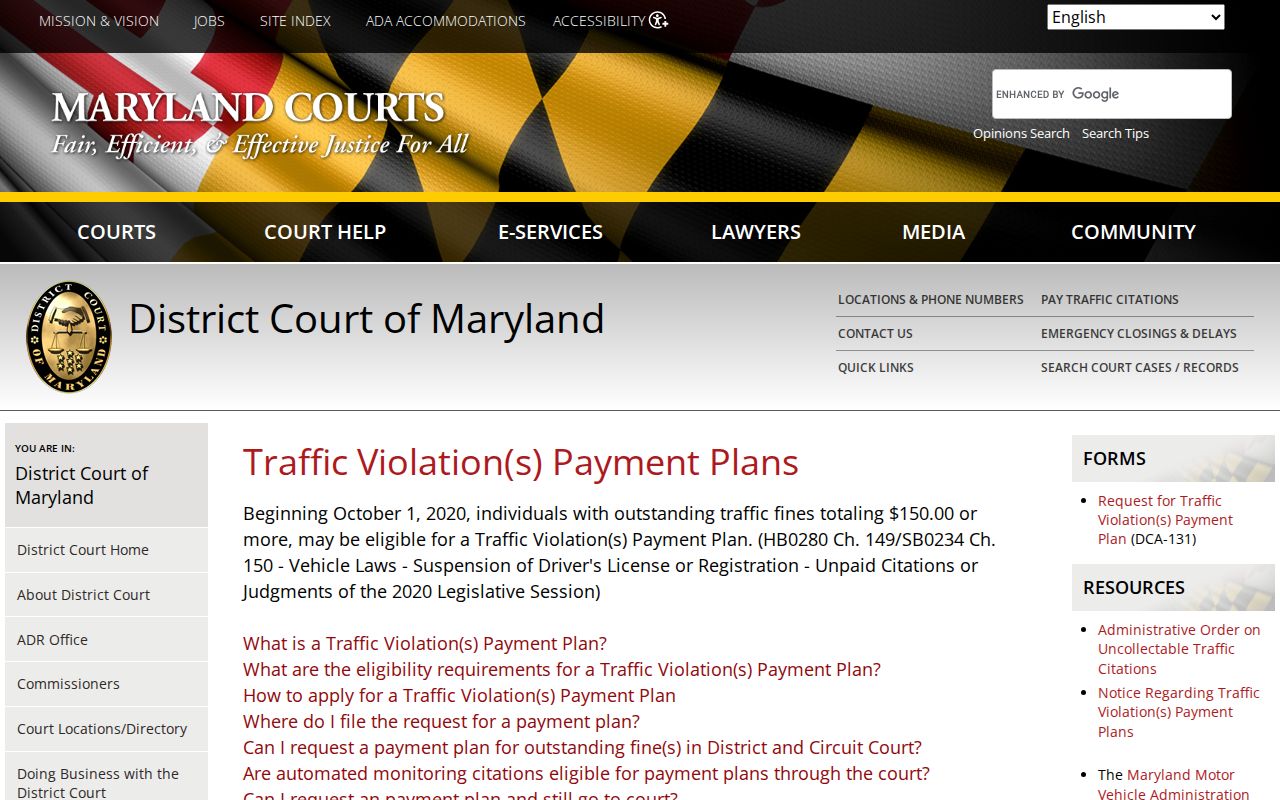
Once a plan is approved, ask the clerk whether a bench warrant remains active and what separate action is needed. The plan addresses the fine balance. A warrant is court process, and Maryland courts may need an express decision to recall it. Confirm the MVA record separately. Do that if a notice was issued. Note: DCA-131 addresses eligible District Court fines; it does not clear a Circuit Court balance or independently recall process.
Maryland Traffic Warrant or Driver Record
A traffic warrant and a motor-vehicle record can trace back to the same citation, yet they live in separate systems in Maryland. The warrant belongs to the District Court case and the agency assigned to serve it. The MVA administers the driver record. Each answers its own question. A license notice is not confirmation from the court. A court order in Maryland, likewise, does not prove that every MVA status has been updated. Case Search can show a public citation case, a hearing, a payment, or a disposition. It gives no full driver history. It does not certify a warrant's status. Once a traffic matter is resolved, check the Maryland court record and any MVA notice through their separate channels.
| Feature | Traffic Warrant | Driver Record |
|---|---|---|
| Record | District Court citation and any warrant event | MVA driving-privilege or vehicle record |
| What it answers | What the court docket shows, subject to access limits | Whether an MVA action was recorded |
| Who can confirm it | Issuing District Court clerk and assigned service agency | MVA for its notice or status |
| How it changes | Court action or authorized service/return update | Separate MVA notice and statutory process |
Check the Court and MVA After a Maryland Clearance
A District Court order can resolve a Maryland traffic warrant. Keep the signed order. Ask who sends the satisfaction notice to MVA. Under §16-204, a driving-privilege suspension lifts once MVA receives the notice, from the court or the reporting agency, that the warrant is satisfied. Other suspensions in Maryland can still stand. A separate §13-406.1 process governs registration or transfer. Its conditions include an unsuccessful service attempt after at least 31 days. The §13-406.1 statute spells out those registration terms, and that official page shows statutory text rather than a person's MVA account or warrant record.
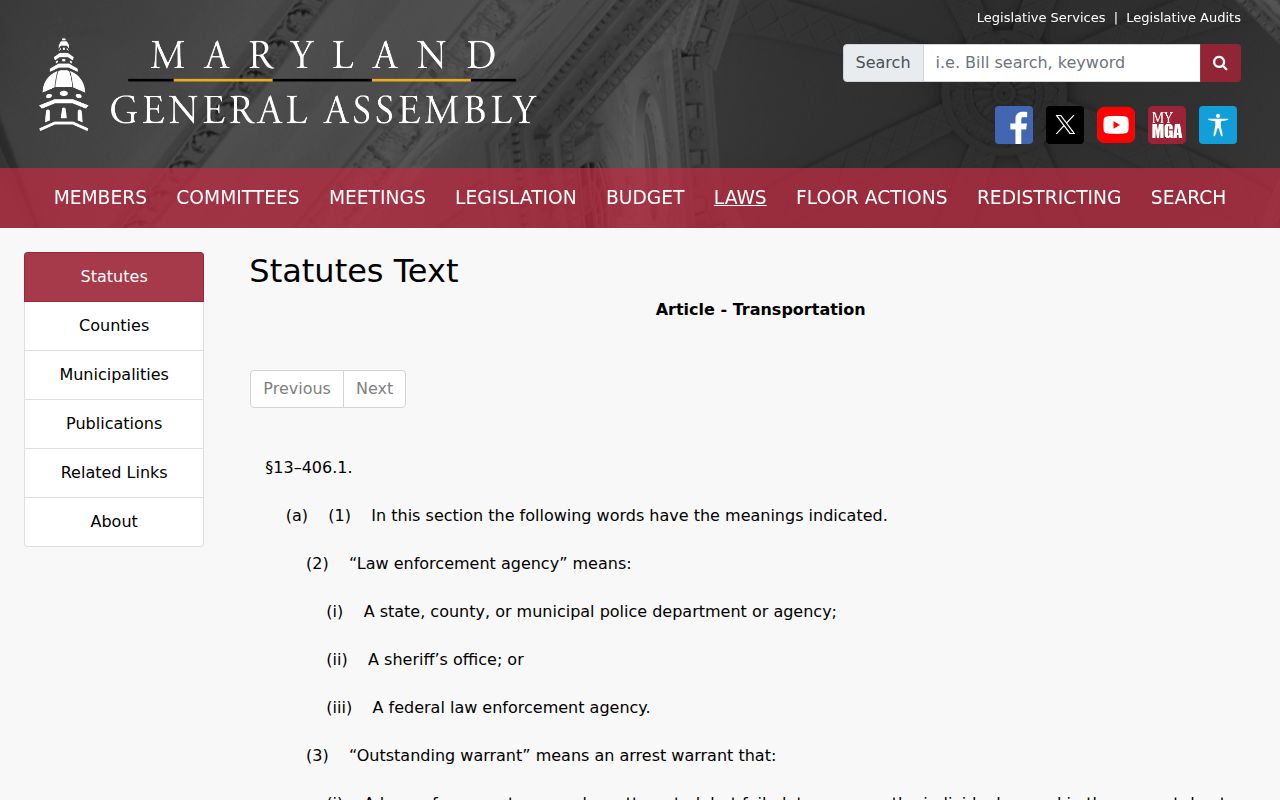
After a Maryland clearance, verify both halves yourself. Confirm the court's warrant entry with the clerk. Then check the MVA action with MVA or the reporting agency named on the notice. A payment receipt, a new hearing date, or the end of a license suspension may not clear every part of the case. Ask for written confirmation and keep it. Note: Verify the Maryland court event and the MVA notice separately, because each record updates through its own route.