
How Municipal Warrants Work in Maryland
Searching for a Maryland “municipal warrant” or “city court warrant” will not turn up a separate criminal-court tier. There isn't one to find. Maryland runs two trial-court levels: the statewide District Court and a Circuit Court in each county and Baltimore City. Traffic, misdemeanor, and lower-level criminal cases mostly land in District Court. A city hall can hand you a parking ticket or an administrative citation. What Maryland cities lack is their own criminal trial court with power to issue warrants. So if that citation grows into a court case, check the court named on the notice or docket. The office that wrote the ticket and the court that issued the warrant can be two different offices. In Maryland the judicial warrant and the case record belong to the court, never to the city ticketing agency. To pick the right level, compare the statewide role of the District Court with the general jurisdiction of the Circuit Court.
Maryland Has No Municipal Criminal Court Warrant Tier
Maryland has no separate municipal criminal-court system, and no justice-of-the-peace criminal tier either. The District Court of Maryland serves as the lower statewide court, arranged in geographic districts with local court locations. So a “municipal warrant” label does not prove a city court issued criminal process. Find the real court and case number before you act. The state counts 23 counties plus Baltimore City, for 24 county/city jurisdictions. Baltimore City sits in District and Circuit Court venues just like the counties, not a municipal-court setup of its own. That matters when a citation recipient later gets a court notice. The correct clerk is the clerk of the court named in that notice. A city parking or administrative ticket may stay with its issuing agency the whole time. A criminal or traffic matter, though, follows the authorized court process. There is no Maryland JP portal to search, and a city citation does not by itself create a municipal bench warrant. Confirm whether a District Court case exists, then ask the court holding it. Note: a Maryland city citation can be real and enforceable without being a municipal-court warrant.
Municipal vs County Warrants in Maryland
In Maryland the useful line sits between the office that wrote a city citation and the court that issued a warrant. The phrase “municipal warrant” blurs that line. A parking ticket, camera citation, or agency notice is not a judicial warrant on its own. Once a court issues a bench or arrest warrant, that filing court holds the case record, while the assigned law-enforcement agency may hold service details. For a Maryland lower-court traffic or misdemeanor matter, start at the District Court location listed in the case. Circuit Court is the general-jurisdiction venue for felony cases and other matters within its authority. A county sheriff usually serves court process. Local police or another agency can be assigned too. The Bench Warrant Lookup and Arrest Warrant Lookup pages explain those distinct warrant types.
| Record or Process | City-Issued Citation | Maryland Court Warrant |
|---|---|---|
| Who starts it | City, police, or other issuing agency named on the notice | Judge or authorized judicial officer in an actual case |
| Where the case goes | As the citation states; some administrative matters stay with the issuer | District Court or Circuit Court, depending on the case |
| Who keeps the record | Issuing agency for an administrative citation; court clerk for a court case | Clerk of the issuing court; serving agency holds its own return information |
| How to confirm | Follow the citation's issuing-office instructions | Ask the court clerk about current process, then the assigned agency about service |
A Maryland City Citation Can Lead to District Court
A Maryland city may write a traffic or parking citation while the court process runs somewhere else. The Judiciary's traffic instructions give recipients 30 days to choose a response for a payable citation. The choices: pay it, request a waiver hearing, request a trial, or use an eligible post-disposition plan. The citation's own instructions and court case number tell you which route fits. The official traffic-citation guidance lays out the District Court response options. It covers general choices, not your case and not any warrant list. If a city citation names a District Court date, call that court about the case. If the notice points to a municipal agency or an administrative appeal instead, contact the named issuer. A Maryland city citation alone does not establish that a court issued a warrant. Note: the Maryland court named on the citation controls the docket, even when another agency issued the ticket.
Maryland Municipal Warrant Checks
Maryland offers no municipal-court warrant portal. Begin with the notice in hand: what kind is it, and which office issued it? If it shows a District Court case or citation number, plug that into the Judiciary's public Case Search. Then call the filing court and ask whether any bench warrant is active. An online hit, or no hit, is never final confirmation.
- Read the notice for the issuing agency, citation number, court, response date, and any hearing date.
- Search Maryland Judiciary Case Search by the case or citation details if it names a District or Circuit Court.
- Use the Judiciary's court map and the Browse Counties directory to find the local court route.
- Ask the court clerk if a warrant event exists and which sheriff or police agency has service responsibility.
- If the notice is administrative and names no court, contact that issuing agency about its appeal or payment process.
The District Court map and directory list Maryland's local court venues. This location-directory view is not a warrant list.
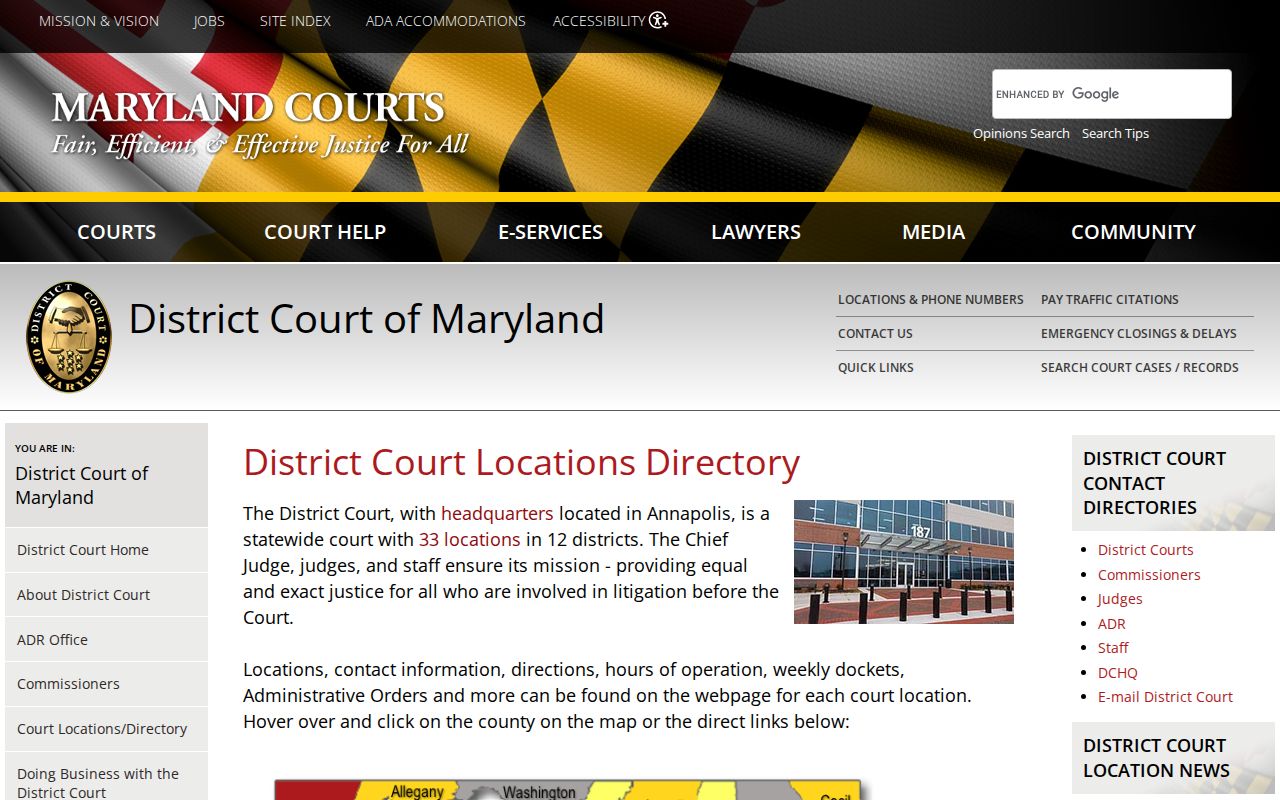
When the court finds no online case, hand the clerk your citation number and notice date directly. Maryland public dockets carry access limits explained in the Judiciary's Case Search FAQ, and some agency citations never appear as court cases. Ask the issuer and the court which record each office keeps.
A Maryland Parking Citation Is Not Automatically a Warrant
A parking ticket from a Maryland city stays a ticket. It does not become a warrant on its own. Most citations offer a payment, contest, or review path through the office that wrote them. Only if the matter reaches a court does a separate case, and possibly a warrant, follow. So read the notice closely. It should say whether a real court, a court date, or only an administrative office sits behind the fine. Automated monitoring citations show the gap well. The Maryland Judiciary says those tickets never appear in Case Search, and it sends anyone with a lost ticket to the local jurisdiction or state agency named on it. That absence does not erase the citation. It does not establish a warrant either. The issuer is simply the right first call in Maryland.
Check the issuer first: A city notice becomes a court matter only through the process stated in the citation or a later court filing.
Ask the agency that issued your Maryland administrative ticket for its record and appeal steps. A court warrant runs on a different track. Confirm the actual District or Circuit Court case first. Check its current docket event too. The two routes can involve different clerks, agencies, and records requests. Note: a missing Maryland online docket can mean an administrative route, not a warrant or a dismissal.
Municipal Warrants: What They Show
Maryland publishes no uniform municipal-warrant record. There is no municipal criminal-court tier to hold one. A city citation that reaches a court lands in District or Circuit Court instead. The real record is that docket and its case events. The table lists record items that may help identify a case; it promises nothing about every portal field or administrative ticket.
| Case number | May identify a District or Circuit Court case. Maryland warrant-number formats were not confirmed as a public statewide standard. |
|---|---|
| Party and charge | The public docket may show the party, case type, charge, or citation details, subject to access limits. |
| Citation issuer | The city or agency that wrote the ticket may differ from the court that holds a later case. |
| Issuing court | Use the court named in the docket or order. Maryland does not have a separate city criminal court to list. |
| Fine or bond | A citation fine and a court-set release condition are different. No statewide city-court bond amount applies. |
| Warrant event | A docket may show an event or later service/return entry; the exact public fields vary and may be restricted. |
When you call, give the clerk the Maryland court name and case number. If a notice shows only an administrative citation number, ask the issuer whether a separate court case exists. A "city" label alone tells you little. It points to no active warrant. Nor does it name the office that can change one.
The Maryland District Court Clerk Holds the Local Case Record
A Maryland District Court traffic or misdemeanor case lives with the local District Court clerk, so ask that office or the administrative clerk for the court record and the procedural route. Circuit Court cases sit elsewhere. The Clerk of the Circuit Court in the filing jurisdiction holds the criminal file. Serving agencies keep their own papers. A sheriff may hold service and return details. The court can refer a service question to that agency. Judicial records follow Maryland Rules Title 16, not the Maryland Public Information Act as a general court-file request. For one District Court case, form DC-034 requests inspection or copies. DC-034A handles multiple cases. Filing either form does not open unserved arrest-warrant records. Those added limits stay in place. The current form lists a $0.50 per-page photocopy fee and a $5 certified-copy fee per document. Those are copy charges. They are not warrant-search or citation-clearing fees. Confirm the form and the clerk's process before requesting anything. A Maryland record request never replaces a direct status call to the issuing court. Police and other executive-agency records need a Maryland Public Information Act request sent to the agency that holds them. MPIA and Title 16 serve different holders. Use the Browse Counties directory to route to the local Maryland court and sheriff once the case venue is known. Note: a Maryland public-record request seeks permitted documents; a status call asks what the court says now.
Clearing a Maryland Municipal Warrant
Start with what the notice is. Administrative paper and a Maryland court case call for different fixes. If a District or Circuit Court warrant is involved, ask that court to confirm the current event. The court can explain whether a motion, hearing, appearance, payment, or surrender is required. Only the issuing court controls the recall process. No other office can. A Maryland city office that wrote the first citation cannot promise a judicial warrant is gone.
- Use Case Search and the citation or case number to identify the Maryland court, then confirm the status with its clerk.
- Ask whether the court accepts a motion before appearance, requires a hearing or surrender, and which agency handles service.
- Follow the court's instructions for the underlying citation, fine, or court date. A payment plan does not itself recall an active bench warrant.
- Keep a signed order or receipt and ask how the service record and any MVA notice will be updated.
Maryland runs no statewide municipal-court surrender process. The Anne Arundel County Sheriff's Safe Surrender program is one local route, not a rule or an option for every jurisdiction. Ask the issuing court how to arrange an appearance and whether counsel should assist.
Caution: Do not assume that paying a city citation, starting a plan, or clearing an MVA notice also recalls a separate Maryland court warrant.
Missed a Maryland City-Ticket Date? Ask About a Bench Warrant
Miss a date on a Maryland city citation, and the first thing to sort out is what the notice demanded. Some tickets call for a court appearance. Others only ask for an administrative reply. If the case landed in District Court, Criminal Procedure §5-212(b) lets a judge issue a bench warrant when a defendant fails to appear on a citation. That power is not automatic. A skipped city-ticket date does not by itself mean a warrant exists. Pull out the case number or citation details and find the court that holds the file. Then ask the clerk directly whether a bench-warrant event was entered and what the court will accept next. The District Court's automated line, 1-800-492-2656, covers hearing dates and court locations, but it is not a warrant-status hotline. Only the issuing court can confirm the warrant. A case filed far from home? The Browse Counties directory points you to the right Maryland jurisdiction. Ask whether the court will set a new date, take a motion before appearance, or schedule an appearance with counsel. The general District Court motion form, DC-002, is not a dedicated recall form, and filing it guarantees nothing. If the bench warrant is confirmed, ask which sheriff or local police agency serves it, and how the court sends its order so you can track service status. Maryland courts and agencies refresh their records on different schedules. Hold onto the signed order, any payment record, and each new hearing notice. A purely administrative citation runs on a separate track. Contact the issuing agency about appeal or payment status rather than assuming it turned into a court warrant. Note: Case Search is a starting point for Maryland venue details, not a public warrant-clearance certificate.